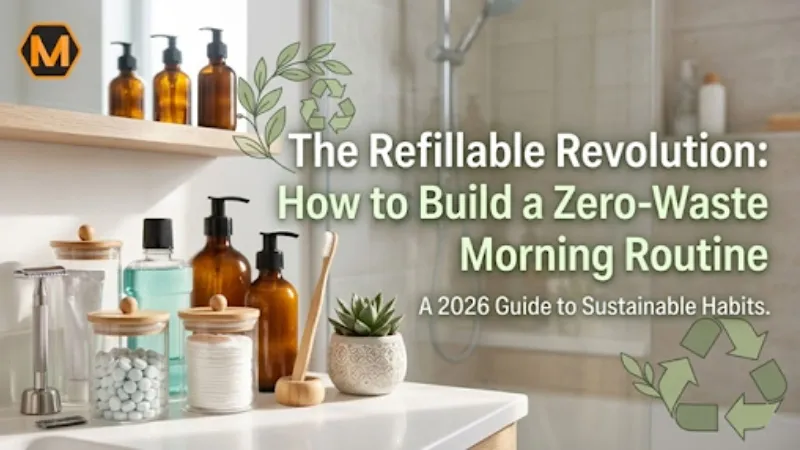
The first sixty minutes of your day set the tempo for everything that follows. Traditionally, this hour is also one of the most waste-intensive periods of our lives. From plastic toothpaste tubes that outlive us by centuries to the disposable pods in our coffee machines, our morning rituals often leave behind a footprint that contradicts our values. However, a new movement is taking hold in 2026: the “Refillable Revolution.” This shift isn’t just about being eco-friendly; it is about simplifying our lives, reducing decision fatigue, and reclaiming a sense of intentionality before we even step out the door.
Transitioning to a zero-waste lifestyle doesn’t require an overnight overhaul of your entire home. Instead, it starts with a “value-bridge” strategy—replacing items as they run out with more sustainable, circular alternatives. For example, as you streamline your physical environment to reduce clutter, you might find that your mental environment needs the same level of optimization to handle high-pressure tasks. Just as you might seek expert assignment help from a trusted academic partner such as myassignmenthelp to manage a heavy research load and reduce your mental “waste,” choosing refillable products allows you to offload the environmental “burden” of single-use plastics. By delegating your waste management to a circular system, you free up cognitive space to focus on the things that actually matter.
The Anatomy of Waste: Why Your Morning Matters
Most people underestimate the cumulative impact of a single morning. A typical “linear” morning routine—where items are bought, used once, and discarded—contributes to the 2 billion tons of municipal solid waste generated globally each year. When we break down the bathroom and kitchen habits of the average household, we see a clear pattern of “micro-trash” that search engines and environmental agencies are increasingly flagging as a primary concern for 2026.
| Morning Item | Traditional Waste Impact | Refillable Alternative | Long-term Benefit |
| Toothpaste | Non-recyclable plastic/aluminum tubes | Toothpaste tablets in glass | Zero plastic; travel-friendly |
| Coffee | Single-use plastic or foil pods | Stainless steel reusable pods | 80% cost reduction per cup |
| Body Wash | Plastic bottles with pump dispensers | Refillable aluminum bottles | Eliminates “ghost plastic” |
| Deodorant | Multi-material plastic sticks | Refillable stainless steel cases | Lifetime durability |
| Razor | Disposable plastic cartridges | Safety razor with steel blades | Superior shave; zero plastic |
The Foundation: Water, Hydration, and Cognitive Clarity
The most basic element of any morning routine is hydration. Most of us start the day with a glass of water, but if that water comes from a plastic bottle, the waste adds up to hundreds of pounds per year. The refillable revolution starts with a high-quality, stainless steel or glass bottle and a reliable home filtration system.
Plastic bottles are often lined with chemicals like BPA or phthalates that can leach into your water over time, especially if exposed to heat. By switching to a permanent vessel, you aren’t just saving the planet; you are protecting your own biology. In 2026, we see a massive trend toward “functional hydration,” where people add electrolytes or trace minerals to their refillable bottles to boost morning brain function. This small change eliminates the need for plastic-wrapped “energy drinks” later in the day, creating a ripple effect of waste reduction.
Sustainable Grooming: From Paste to Tabs
The bathroom is often the “ground zero” of household waste. Between liquid soaps in non-recyclable pumps and plastic toothbrushes, it’s a graveyard of short-term convenience. The refillable revolution addresses this through “dry” products. Toothpaste tablets, for instance, come in compostable pouches or refillable glass jars. You simply chew the tablet, brush with a wet bamboo toothbrush, and avoid the messy, non-recyclable tubes entirely.
Before we dive into the specifics of your morning skincare, it is important to understand how to document and share these sustainable practices effectively. For students or researchers looking to publish findings on environmental psychology, knowing How to Write an APA Abstract is essential for ensuring your work reaches the right audience and meets academic standards. Once you have mastered the art of concise academic reporting, you can apply that same precision to your personal habits.
Refillable Skincare and the “Pod” System
The skincare industry has finally embraced the circular economy. Rather than buying a new heavy glass or plastic jar every month, many brands now offer a “shell and pod” system. You buy a beautiful, permanent outer container once and simply swap out the inner product pod when it’s empty. This reduces packaging waste by up to 80% and often lowers the cost for the consumer.
When choosing these products, look for brands that prioritize “clean” chemistry. Since you are applying these substances to your skin daily, you want to avoid microplastics and synthetic fragrances that can disrupt your endocrine system. A zero-waste morning routine is essentially a biohacking strategy; by removing toxins from your environment, you allow your body to perform at its peak mental and physical levels.
Visualizing the Circular Morning Flow
To understand how a zero-waste routine functions compared to a traditional one, we can look at the “Circular Efficiency Map.” This diagram illustrates how resources stay within a closed loop rather than ending in a landfill.
- Input: Sun/Energy -> Whole Foods/Bulk Coffee -> Refillable Personal Care.
- Action: Morning Rituals (Hydration, Grooming, Nutrition).
- Output: Compostable Food Scraps -> Recyclable Steel/Glass -> Mental Clarity.
- Result: Zero Landfill Contribution.
The Kitchen: Ethical Coffee and the “Second Brain”
For many, the morning doesn’t truly begin until the first sip of caffeine. Unfortunately, the “convenience” of single-use coffee pods has created a massive environmental crisis. To join the refillable revolution, consider returning to the basics: a French press, a pour-over, or a stainless steel reusable pod for your existing machine.
Buying coffee beans in bulk from local roasters who use returnable tins is the gold standard. Not only is the coffee fresher, but you also support local supply chains. The spent coffee grounds themselves are a valuable resource; instead of throwing them in the trash, they can be added to a compost bin or used as a natural garden fertilizer. This turns a linear “take-make-waste” process into a perfect circle. This level of organization in your kitchen often mirrors the organization needed in your professional life. When you manage your physical resources well, you develop the “topical authority” over your own time and productivity.
Wardrobe Minimalism and “Slow Fashion”
While we don’t usually think of getting dressed as a waste-producing activity, the “fast fashion” industry is one of the world’s largest polluters. A zero-waste morning involves choosing a “capsule wardrobe”—a collection of high-quality, versatile pieces that you actually love wearing. This reduces the “cognitive load” of choosing an outfit and ensures that you aren’t contributing to the textile waste that clogs global landfills.
Instead of buying a new outfit for every season, focus on durable natural fibers like organic cotton, hemp, or wool. These materials last longer and don’t shed microplastics into the water system when washed. Taking care of your clothes—learning to mend a button or using a refillable fabric spray—is a radical act of sustainability in a world that wants you to keep buying more.
Mindset: The “Deep Work” of Sustainability
The final piece of a zero-waste morning routine isn’t a product; it’s a mindset. In our 2026 digital landscape, we are constantly bombarded with advertisements for “the next big thing.” Practicing digital minimalism as part of your morning—waiting at least an hour before checking your phone—allows you to stay grounded in your physical reality.
This mental clarity is what allows you to make better choices throughout the rest of the day. When you aren’t rushing and reacting to notifications, you have the presence of mind to remember your reusable bag, choose the refillable option at the grocery store, and stay committed to your goals. Sustainability is a marathon, not a sprint. It is built through small, repeatable actions that eventually become second nature.
Information Gain: The Science of Habit Formation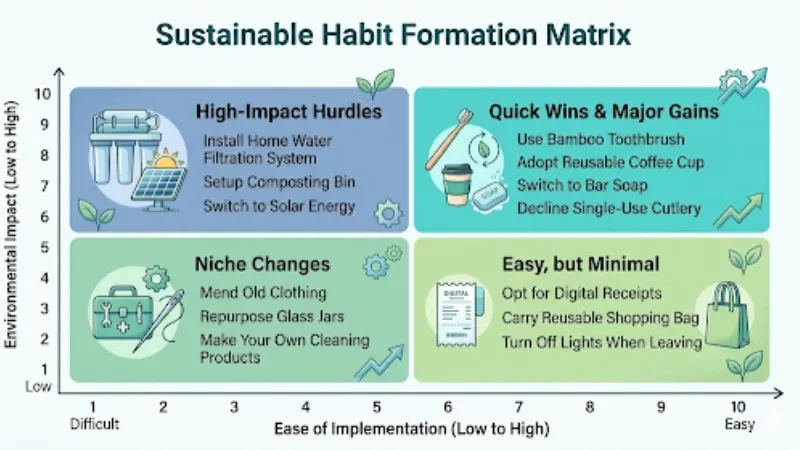
Why do some people stick to a zero-waste routine while others fail? The answer lies in “Atomic Habits.” When you make a sustainable choice easy and attractive, your brain releases dopamine, reinforcing the behavior.
- Reduce Friction: Keep your refillable coffee pod right next to the machine.
- Visual Cues: Place your bamboo toothbrush in a beautiful glass holder.
- Community Connection: Share your progress on sites like BetterThisFactsTips.org to create a sense of accountability.
By focusing on these psychological triggers, you transform a “chore” into a rewarding ritual. This is the essence of Information Gain—taking a standard eco-friendly tip and applying behavioral science to make it actually work in a modern, busy life.
How to Stay Consistent
The biggest challenge to any new routine is the “convenience trap.” On mornings when you are tired or running late, it is easy to reach for the disposable option. To prevent this, set yourself up for success the night before.
- Prep your refills: Ensure your water bottle is filled and your coffee station is ready.
- Inventory Check: Once a month, check your refillable “pods” and bulk bins to ensure you never run out of the basics.
- The 10% Rule: Don’t aim for 100% perfection immediately. Aim to reduce your morning waste by 10% each week.
By building a zero-waste morning routine, you are doing more than just saving plastic. You are participating in a global movement toward a more conscious and intentional way of living. You are proving that it is possible to enjoy the modern world without destroying it, and you are creating a blueprint for others to follow. The refillable revolution is here, and it starts the moment you wake up.
Frequently Asked Questions (FAQ)
Is a zero-waste routine more expensive?
Initially, some items (like a high-quality water bottle or a safety razor) have a higher upfront cost. However, because you are no longer buying disposables every month, the average household saves roughly $450 per year by switching to refills.
Where do I find refill stations in 2026?
The “Refillery” movement has gone mainstream. Most major urban centers now have local shops where you can bring your own jars. Additionally, many online brands now offer a “circular mail” service where you return empty pods in a pre-paid envelope.
Does one person’s routine actually make a difference?
Yes. Data shows that one person switching to a zero-waste morning routine prevents approximately 40 lbs of plastic from entering landfills annually. When multiplied by a community, the impact is structural.
About The Author
Ethan is an insightful researcher and a dedicated content strategist for MyAssignmentHelp, focusing on the intersection of productivity and practical lifestyle habits. He is passionate about helping others streamline their daily routines and achieve peak performance through sustainable, evidence-based practices.