Key Takeaways
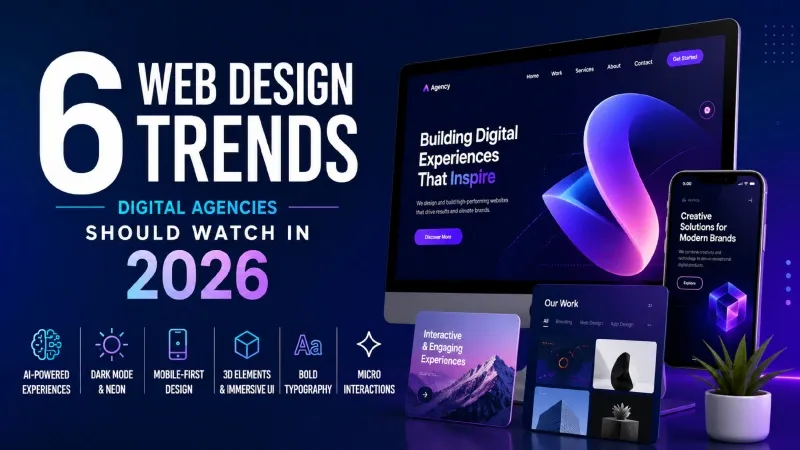
- Embracing dark mode enhances visual appeal and reduces eye strain.
- Minimalist designs improve user experience and site performance.
- AI-driven personalization tailors content to individual user preferences.
- Micro-interactions boost engagement through subtle animations.
- 3D elements and immersive experiences captivate users.
- Prioritizing accessibility ensures inclusivity for all users.
Table of Contents
- Dark Mode: A Sleek and User-Friendly Aesthetic
- Minimalism: Simplifying User Experience
- AI-Driven Personalization: Tailoring Content to Users
- Micro-Interactions: Enhancing Engagement
- 3D Elements and Immersive Experiences
- Prioritizing Accessibility in Web Design
In the ever-evolving digital landscape, keeping up with the latest web design trends is essential for any digital agency website striving to stand out and deliver optimal results. The trends emerging are redefining digital innovation and user experience, setting new benchmarks for aesthetics and interactivity. These influential approaches push boundaries, ensuring websites not only look appealing but also function seamlessly for every user.
From the rise of dark mode and minimalism to advancements in AI-driven personalization, agencies must remain vigilant to offer their clients competitive, future-ready solutions. Features like micro-interactions, immersive 3D visuals, and enhanced accessibility are more than passing fads; they are shaping user expectations and driving results for businesses. As web technology progresses, understanding and implementing these trends is vital for ongoing success.
Adapting to these innovations also benefits the agency-client relationship by fostering transparency and trust. Whether reimagining a company’s brand presence or boosting usability, the most forward-thinking digital agencies focus on satisfying both users and stakeholders. By aligning agency strategies with the very best of web design, businesses win consumer trust and spark deeper engagement.
As agencies consider new creative possibilities, consulting resources from thought leaders and industry experts can provide deeper insight. For additional perspectives on web usability, see authoritative analyses by Nielsen Norman Group, a respected voice in the field of user-centred design.
Dark Mode: A Sleek and User-Friendly Aesthetic
Dark mode continues to gain traction as a preferred style for websites and applications, offering a visually striking appearance and improved ease of use in low-light settings. By reducing bright light exposure, dark mode options help minimize eye fatigue for users who spend extended time online. Additionally, devices use less energy with dark themes, especially on OLED screens, making dark mode design beneficial for both user comfort and sustainability.
Customizable interface themes are quickly becoming standard, allowing digital agencies to meet diverse user needs. Beyond aesthetics, the popularity of dark mode demonstrates an ongoing shift toward more user-centred design. As noted by Smashing Magazine, integrating dark mode requires attention to contrasts, legibility, and overall composition to ensure a polished, accessible result.
Minimalism: Simplifying User Experience
Minimalism prioritizes simplicity, clarity, and directness, sparing users from clutter and distraction. With a focus on clean lines, generous whitespace, and refined navigation, minimalist websites improve load speeds and enhance usability on all device types. Removing unnecessary elements speeds up discovery, helping users achieve their goals with fewer obstacles.
Implementing a minimalist approach also supports brand messaging and visual identity by emphasizing only what matters most. When content hierarchy is clear, digital agencies ensure users encounter the most valuable features or information first. Fast loading and ease of navigation, combined with focused aesthetics, make minimalism a winning strategy for conversions.
AI-Driven Personalization: Tailoring Content to Users
Artificial intelligence is becoming indispensable in crafting tailored website experiences. By harnessing machine learning algorithms, agencies can deliver personalized recommendations, content, and even site layouts that are uniquely adapted to user behaviors, locations, and preferences. This approach results in heightened relevance and deeper engagement.
AI-powered personalization does not just deliver convenience; it also drives business objectives by increasing retention and boosting conversion rates. Modern consumers expect brands to anticipate their needs, and AI systems empower digital agencies to exceed expectations. As advancements continue, integrating AI personalization will be a key differentiator for competitive digital agencies.
Micro-Interactions: Enhancing Engagement
Micro-interactions are subtle design elements that react to user activity, such as hovering over a button, clicking a link, or scrolling through a menu. These brief animations or visual feedback cues make the overall interface feel more dynamic and alive without overwhelming site performance or distracting from the substance. When properly implemented, micro-interactions reinforce a positive sense of control and clarity for users.
Not only do micro-interactions contribute to enjoyment, but they also improve accessibility by guiding the user throughout their journey. Digital agencies use these small but powerful enhancements to deliver delightful, memorable user experiences that help build brand loyalty.
3D Elements and Immersive Experiences
Advanced web technologies now make it feasible for agencies to integrate 3D graphics and immersive features on mainstream websites. From interactive product visualizations to intricate animated backgrounds, these enhancements grab attention and invite exploration. Engaging 3D design elevates visual storytelling, transforming basic informational sites into interactive brand showcases.
Effective use of 3D does not require sacrificing site speed or accessibility. With modern frameworks and platforms, creative agencies can produce compelling effects that work smoothly across devices. Agencies that embrace this trend unlock new opportunities for differentiation and user engagement, setting their clients apart in a crowded digital marketplace.
Prioritizing Accessibility in Web Design
Inclusive design ensures that digital spaces are welcoming and usable for all, including those with disabilities. By implementing features like high-contrast color palettes, logical keyboard navigation, and compatibility with screen readers, agencies make their websites accessible to a wider audience while also demonstrating corporate responsibility.
Complying with accessibility standards is now both a legal and ethical imperative. Agencies that prioritize usability create environments where all visitors can participate equally, regardless of their abilities. By continuing to evolve best practices and investing in accessible design, digital leaders shape a web that reflects and respects the diversity of its global user base.
By leveraging these influential web design trends, digital agencies position themselves as innovators that deliver captivating, user-centric websites. Staying agile and informed is the secret to continued growth and influence in the rapidly changing world of digital design.