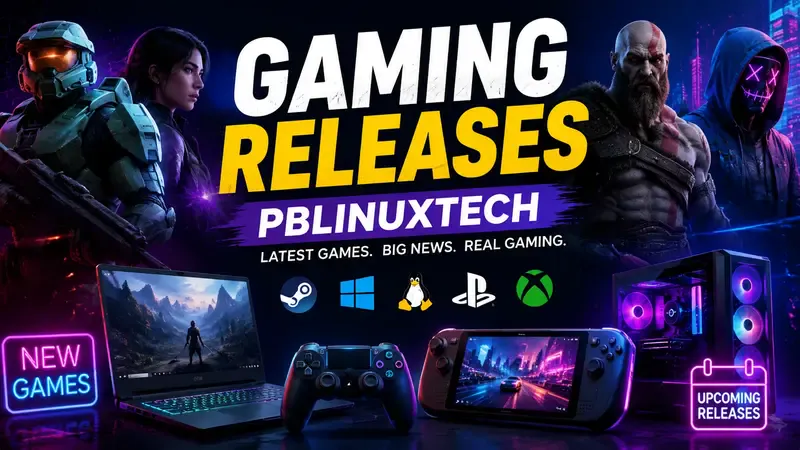
The world of gaming is moving faster than ever. Every month brings new titles, fresh trailers, surprise announcements, major updates, early access launches, platform expansions, and technological changes that shape how players enjoy games. For gamers who want to stay updated without wasting time searching across multiple websites, Gaming Releases PBLinuxTech can become a useful guide to understanding what is launching, what is trending, and what is worth playing.
Gaming today is no longer limited to a single console or a single type of player. Some gamers prefer high-end PC gaming, while others enjoy PlayStation, Xbox, Nintendo, Steam Deck, cloud gaming, or Linux-based gaming setups. This variety makes the gaming release calendar both exciting and confusing. A title may launch on consoles first, then come to PC later. Some games may support cross-platform play, while others may be locked to one ecosystem. Some may run smoothly on Linux via Proton, while others may encounter issues due to anti-cheat systems, DRM, or poor optimization.
This is where a focused gaming release guide becomes important. Gaming Releases PBLinuxTech is not just about listing new games. It is about helping players understand release dates, platforms, performance expectations, genre trends, system requirements, compatibility, and whether a new title is actually worth the hype.
What Does Gaming Releases PBLinuxTech Mean?
The phrase “Gaming Releases PBLinuxTech” can be understood as a modern gaming update hub focused on new game launches, technology, platforms, and especially PC- or Linux-friendly gaming. The phrase “gaming releases” points to new and upcoming games, while “PBLinuxTech” lends the topic a technology-focused identity. This makes it suitable for an article, blog category, YouTube topic, or website section that covers both gaming news and gaming technology.
Unlike general gaming news, a PBLinuxTech-style release guide should focus on practical value. It should answer questions like:
Which games are coming soon? Which platforms will support them? Will the game be available on PC? Can it run on Linux or Steam Deck? Is it better to wait for reviews before buying? Will the game support multiplayer, mods, or controller play? Is the game optimized, or will it need patches after launch?
These are the real questions gamers ask before spending money. Modern games are expensive, and many titles launch with different editions, pre-order bonuses, early access versions, and seasonal content plans. A smart gamer does not only look at the trailer. A smart gamer checks performance, platform support, developer history, update roadmap, and community feedback.
Why Gaming Release Updates Matter
Gaming releases matter because the gaming industry is built around timing. A game may become popular because it launches at the right moment, gets strong reviews, performs well on social media, or becomes part of a larger cultural trend. For example, open-world games, survival games, extraction shooters, cozy games, anime RPGs, horror remakes, and live-service titles all attract different audiences.
Release updates also help gamers plan their budget. Many players cannot buy every new game at launch. They need to choose carefully. Knowing which games are coming in the next few months helps them decide whether to pre-order, wait for a discount, subscribe to a gaming service, or upgrade their hardware.
For PC and Linux gamers, release information is even more important. A game may be available on Windows but not officially supported on Linux. However, it might still run through Proton, Steam Play, or community fixes. Some games become Steam Deck Verified, while others remain unsupported. This can strongly affect buying decisions.
A good release guide saves time, reduces confusion, and helps players make better choices.
The Changing Nature of Game Launches
In the past, a game launch was simple. A title came out on a certain date, players bought it, and that was the main event. Today, game launches are much more complex. Many games go through multiple launch stages.
A game may first appear as a teaser trailer. Then it may receive a gameplay reveal, a closed beta, an open beta, an early access release, a full release, console and PC launches, and later DLC expansions. Some games also have regional release dates or platform-specific delays.
This means a “release date” is no longer always a single date. Players need to know what kind of release is happening. Is it early access? Is it a demo? Is it a full version? Is it only for digital buyers? Is it included in a subscription service? Is it available worldwide?
For Gaming Releases PBLinuxTech, this distinction is important. A proper guide should not only say that a game is “released.” It should explain the type of release and what players can expect.
Major Platforms for Gaming Releases
Modern gaming releases usually cover several major platforms. The most common are PC, PlayStation, Xbox, Nintendo, Steam Deck, Linux, and cloud gaming services. Each platform has its own strengths and limitations.
PC gaming offers flexibility, high performance, modding, graphics settings, and long-term library ownership. Console gaming provides simplicity, optimization, and exclusive titles. Nintendo platforms often focus on family-friendly, creative, and exclusive experiences. Steam Deck and handheld PCs are changing how players enjoy PC games on the go. Linux gaming is growing because of Proton, SteamOS, and the popularity of handheld gaming devices.
Cloud gaming also plays a role by allowing players to stream games without owning powerful hardware. However, it depends heavily on internet speed, latency, and service availability.
A strong gaming release article should always clearly mention platforms. Players do not only want to know that a game exists. They want to know whether they can actually play it on their device.
PC Gaming Releases: Still the Most Flexible Option
PC remains one of the most powerful platforms for gaming releases. It supports a wide range of genres, including AAA games, indie games, strategy games, simulation titles, MMOs, competitive shooters, and early access projects. PC gamers also benefit from frequent discounts, modding communities, multiple storefronts, and customizable graphics settings.
However, PC gaming also has challenges. Some games launch with poor optimization, shader compilation stutter, crashes, driver issues, or high system requirements. This is why PC players often wait for benchmarks before buying a new release.
For PBLinuxTech-style coverage, PC releases should be examined from a technical angle. Important details include CPU and GPU requirements, storage size, SSD recommendation, frame-rate targets, ultrawide support, controller support, ray tracing, upscaling technologies, and online requirements.
A game may look amazing in trailers, but perform poorly on mid-range PCs. That is why technical analysis matters as much as release news.
Linux Gaming and the Rise of Proton
Linux gaming has changed dramatically in recent years. In the past, Linux users had limited access to major games. Most developers targeted Windows first, and Linux ports were rare. Today, Proton has changed the situation by allowing many Windows games to run on Linux through Steam.
Proton is especially important for Steam Deck users because the Steam Deck runs SteamOS, a Linux-based operating system. Many Windows games can run on Steam Deck through Proton without needing a native Linux version. This has made Linux gaming more practical for everyday players.
Still, Linux gaming is not perfect. Some games do not work because of anti-cheat systems, launchers, DRM restrictions, or unsupported video codecs. Multiplayer titles can be more complicated than single-player games because competitive anti-cheat tools may not be available for Linux.
For Gaming Releases, PBLinuxTech, Linux compatibility should be a key part of release coverage. Every major PC release should be checked for Proton status, Steam Deck rating, controller support, and community reports. This makes the guide useful for players who want alternatives to Windows gaming.
Steam Deck and Handheld Gaming Releases
The Steam Deck has created a new category of interest in gaming releases. Many players now ask whether a new game is Steam Deck Verified, Playable, Unsupported, or Unknown. This matters because handheld gaming has different requirements from desktop gaming.
A game that runs well on a powerful PC may struggle on a handheld device. Text may be too small, controls may not be optimized, battery usage may be high, or performance may require lower settings. Steam Deck Verified status helps players know whether a game is comfortable to play on the device.
Handheld gaming also affects game design. Developers are now more aware of controller support, scalable UI, cloud saves, suspend/resume behavior, and performance presets. These features can make a game more accessible and portable.
PBLinuxTech can use this trend by giving special attention to handheld compatibility. A release guide that includes Steam Deck notes will stand out because many gamers now care about portable PC gaming.
Console Gaming Releases: PlayStation, Xbox, and Nintendo
Console gaming remains a major part of the release calendar. PlayStation often attracts players who enjoy cinematic story-driven games, action-adventure games, and strong exclusives. Xbox focuses heavily on ecosystem value, backward compatibility, Game Pass, and cross-platform access. Nintendo continues to dominate family-friendly gaming, creative design, and exclusive franchises.
Console releases are usually easier for casual players because the hardware is fixed. Developers optimize the game for specific machines, so players do not need to worry about graphics cards, drivers, or system requirements. However, console players still need to consider performance modes, resolution modes, storage space, online subscriptions, and edition differences.
Many modern games offer “Quality Mode” and “Performance Mode.” Quality Mode may target better visuals at lower frame rates, while Performance Mode may reduce graphics settings to achieve smoother gameplay. For competitive or action-heavy games, performance mode is usually preferred.
A complete gaming release guide should cover these differences in simple language.
Genres Dominating Modern Gaming Releases
Gaming releases are shaped by genre trends. Some genres rise quickly because of player demand, streaming popularity, and developer innovation. Currently, several categories continue to attract strong attention.
Open-world games remain popular because players enjoy freedom, exploration, and long playtime. RPGs continue to grow because they offer character progression, story choices, and deep customization. Survival games are popular because they combine crafting, danger, base-building, and multiplayer cooperation. Horror games remain strong because streamers and audiences enjoy intense reactions and atmospheric storytelling.
Cozy games are also rising. These games focus on farming, decorating, exploring, building relationships, and relaxing gameplay. They are popular among players who want low-stress experiences. Indie games are another major force because smaller developers often create fresh mechanics and emotional storytelling that large studios avoid.
A PBLinuxTech gaming release guide should not only focus on big AAA titles. It should also highlight indie gems, early access projects, and niche releases that may become surprise hits.
AAA Games vs Indie Releases
AAA games usually receive the most attention because they have large budgets, advanced graphics, famous studios, and global marketing campaigns. These games often dominate headlines, trailers, and pre-order charts. However, they also carry higher expectations. If a AAA game launches with bugs or missing features, players react strongly.
Indie games are different. They may not have huge marketing budgets, but they often bring creativity and originality. Many successful indie titles became popular because of strong gameplay ideas rather than expensive visuals. Indie developers can take risks that major publishers avoid.
For gamers, the best approach is to follow both AAA and indie releases. AAA games may offer scale and spectacle, while indie games may offer innovation and personality. A balanced release guide should include both.
Early Access: Opportunity or Risk?
Early access has become a common part of gaming releases. It allows players to buy and play a game before the full version is complete. This can be exciting because players get early access to new ideas and may help shape development through feedback.
However, early access also carries risk. Some games remain unfinished for years. Some developers lose momentum. Some projects change direction. Players should understand that early access is not the same as a complete release.
Before buying an early access game, players should check the developer roadmap, update history, community reviews, current content level, and refund policy. A good early access game should already be enjoyable, not just promising.
For PBLinuxTech, early access coverage should be honest. It should explain what is currently available, what is missing, and whether the game is worth buying now or better to wait for the full release.
Game Optimization and Performance at Launch
Performance is one of the biggest concerns in modern gaming releases. Players have become more cautious because many games launch with technical problems. Poor optimization can affect even powerful systems. Issues may include low frame rates, stuttering, crashes, memory leaks, long loading times, and server instability.
This is why release-day reviews and benchmarks are important. A game may have strong gameplay but weak performance. In such cases, waiting for patches may be the better choice.
PC players should check recommended specifications, but they should also look at real-world benchmarks. Console players should check whether the game offers a stable performance mode. Steam Deck users should check battery life, resolution scaling, and Proton compatibility.
A release guide that clearly explains performance will be more useful than one that merely repeats marketing claims.
Multiplayer and Live-Service Releases
Multiplayer games differ from single-player releases in that their success depends on player population, servers, balance, anti-cheat, and long-term updates. A multiplayer game can have great mechanics but fail if matchmaking is poor or servers are unstable.
Live-service games add another layer. They usually include seasons, battle passes, events, cosmetics, and regular content drops. This can keep the game active for years, but it can also create pressure on players to spend money or keep grinding.
Before starting a new live-service game, players should ask whether the monetization feels fair, whether the developers communicate well, and whether the gameplay is enjoyable without constant spending.
For Gaming Releases PBLinuxTech, multiplayer coverage should include server stability, cross-play support, anti-cheat compatibility, and a long-term roadmap.
Pre-Orders, Deluxe Editions, and Buyer Caution
Modern game releases often come with several editions. A standard edition may include the base game, while deluxe or ultimate editions may include skins, early access, season passes, digital artbooks, soundtracks, or bonus missions. Pre-orders may also include exclusive content.
Players should be careful. Not every deluxe edition is worth the extra cost. Sometimes the bonus content is cosmetic only. Sometimes, early access is just a few days. Sometimes, the season pass content is not clearly explained.
A smart approach is to wait for reviews unless the developer has a strong track record and the game offers transparent value. Pre-ordering should be based on confidence, not hype.
PBLinuxTech can help readers by breaking down editions and explaining which version offers the best value.
How to Track Upcoming Gaming Releases
There are several practical ways to track gaming releases. Players can follow official developer websites, Steam pages, PlayStation Store listings, Xbox Store updates, Nintendo announcements, gaming news websites, YouTube showcases, and community databases.
Steam wishlists are especially useful for PC players because they send notifications when a game launches or goes on sale. Console stores also allow wishlisting and pre-loading in many cases. For Linux gamers, the ProtonDB and Steam Deck Verified labels are useful for checking compatibility.
Social media can be helpful, but it can also spread rumors. Players should separate confirmed release dates from leaks and speculation. Official announcements are always more reliable than anonymous posts.
A good release guide should clearly label information as confirmed, expected, rumored, or delayed.
Why Games Get Delayed
Delays are common in the gaming industry. A delayed game is not always a bad sign. Sometimes developers need more time for polishing, bug fixing, performance optimization, localization, certification, or platform approval.
However, repeated delays can indicate development problems. Players should watch how developers communicate. Honest communication builds trust, while vague statements create uncertainty.
It is better for a game to be delayed and launch in a polished state than to release early with serious problems. Many gamers now prefer quality over rushed deadlines.
For PBLinuxTech, delay coverage should be balanced. It should explain the possible reasons without creating unnecessary drama.
The Role of Reviews and Community Feedback
Reviews help players understand whether a new release is worth buying. Professional reviews usually focus on design, story, gameplay, visuals, sound, and performance. User reviews reveal broader community experience, including bugs, crashes, server problems, and value for money.
Both types of reviews matter. Professional reviewers may complete the game before launch, but user reviews show how the game performs across many systems and regions.
For PC and Linux gamers, community feedback is especially important because compatibility can vary across hardware, drivers, Proton versions, and settings. A game may work perfectly for one player but fail for another.
Gaming Releases PBLinuxTech should encourage readers to check reviews before buying, especially for expensive titles.
Future Trends in Gaming Releases
Future gaming releases will likely become more platform-flexible. Cross-play, cross-save, cloud gaming, handheld PC gaming, and compatibility layers are changing how players access games. The idea of being locked to one device is becoming less attractive.
Artificial intelligence may also affect game development. AI tools can help with animation, testing, world-building, dialogue systems, and content generation. However, developers will still need strong creative direction. Technology alone cannot make a great game.
Another trend is the growth of remakes and remasters. Many publishers are bringing older games back with improved graphics, controls, and quality-of-life updates. This appeals to both nostalgic players and new audiences.
Subscription services will also continue to influence release strategies. Some games may launch day one on subscription platforms, while others may rely on traditional sales.
How PBLinuxTech Can Stand Out in Gaming Coverage
To stand out, Gaming Releases PBLinuxTech should focus on useful, honest, and technically aware coverage. Many websites already publish release lists, but not all of them explain what those releases mean for different players.
PBLinuxTech can offer value by including platform breakdowns, Linux compatibility notes, Steam Deck performance expectations, PC requirements, edition comparisons, and practical buying advice. This approach helps casual players, PC gamers, Linux users, and handheld gamers alike.
The tone should be simple, clear, and reader-friendly. Gamers do not want complicated explanations when they are deciding what to play. They want accurate information, honest recommendations, and easy guidance.
Final Thoughts
Gaming releases are more exciting and more complicated than ever. New titles arrive across PC, consoles, handhelds, cloud services, and Linux-based systems. Players have more choices, but they also need better information before spending money.
Gaming Releases PBLinuxTech can become a valuable guide for gamers who want more than basic release dates. It can help readers understand platforms, performance, compatibility, genres, editions, early access risks, and future trends. In a market full of hype, honest gaming coverage is more important than ever.
The best gaming experience comes from making informed choices. Before buying a new game, players should check the release type, platform support, reviews, system requirements, Steam Deck status, Linux compatibility, and long-term update plans. This approach saves money and helps players enjoy games without disappointment.
Whether you are a PC gamer, console player, Steam Deck user, Linux enthusiast, or casual gamer, staying up to date with gaming releases helps you make better choices and play smarter. That is the real purpose of Gaming Releases PBLinuxTech to make gaming news simple, useful, and practical for every type of player.