Table of Contents
- The Evolution of Storyboarding
- Benefits of Digital Storyboarding
- AI Integration in Storyboarding
- Impact on Filmmaking
- Applications in Advertising and Marketing
- Educational Uses of Digital Storyboarding
- Future Trends in Digital Storyboarding
- Conclusion
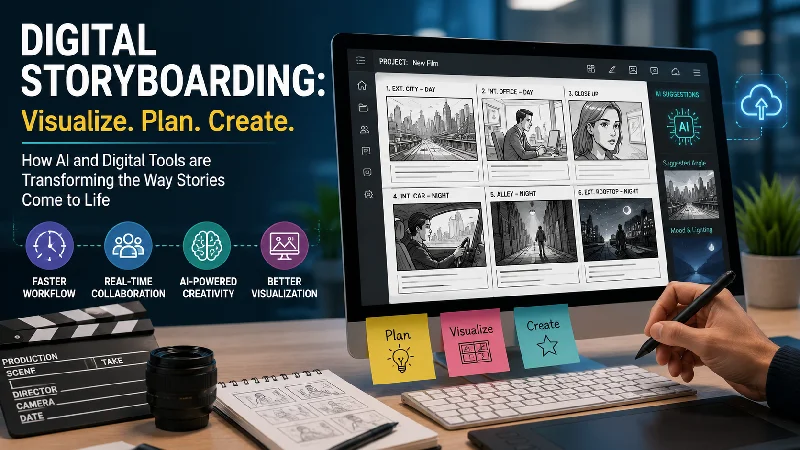
In an era of ever-higher content demands, digital storyboarding has emerged as a transformative force for creators across industries. This innovative approach enables the visualization and structuring of ideas faster and with greater flexibility, unlocking new possibilities for everyone from filmmakers to marketers. By using storyboard AI tool, creators can quickly generate, modify, and share storyboards, streamlining workflows and improving project outcomes.
As digital solutions become increasingly sophisticated, even those without strong drawing skills or technical know-how can actively participate in the creative process. Teams separated by continents can now collaborate in real-time, ensuring everyone’s vision comes together seamlessly. These cloud-based solutions are making collaboration intuitive and efficient, making it easier to iterate and refine storyboards in response to evolving project needs. One of the standout benefits of these advancements is the democratization of visual storytelling.
More people from diverse backgrounds can now engage in content creation, bringing fresh perspectives and new ideas to industries such as education, marketing, and entertainment. Workflows that previously took days or weeks can now be completed in hours, thanks to integration with artificial intelligence. This digital shift has not only redefined the process but has also introduced new standards for visualization quality, allowing for richer, more detailed narratives to take center stage. As a result, projects can be greenlit, revised, or improved earlier in the process, reducing bottlenecks and costly reworks downstream.
The Evolution of Storyboarding
Storyboarding began as a manual process, relying on hand-drawn frames to plot the visual sequence of a project. This approach was painstaking and often limited participation to skilled artists. With the introduction of digital tools, anyone with a creative idea could contribute, making the process faster and more inclusive. Instant editing, reusable assets, and drag-and-drop features further minimized technical barriers, making it easier to bring stories to life at any stage of production.
Benefits of Digital Storyboarding
Digital storyboarding has many advantages over traditional methods, including:
- Efficiency: Rapid iteration and editing save time, allowing creators to focus on refining ideas rather than redrawing scenes.
- Collaboration: Remote teams can work together in one environment, adding notes, feedback, and suggestions in real time.
- Visualization: High-fidelity visuals, including color, motion, and depth, offer stakeholders a clearer understanding of the project at every stage.
Along with streamlining the workflow, digital storyboarding increases transparency and improves communication among teams, stakeholders, and clients.
AI Integration in Storyboarding
Artificial intelligence has accelerated the evolution of digital storyboarding. AI-driven tools can generate 3D animated storyboards from written scripts, automatically filling in backgrounds, camera angles, and character movement. This level of automation dramatically reduces production lead times. Platforms have shown how AI enables filmmakers to visualize and test multiple versions of scenes without manual sketching. These powerful solutions help directors and producers refine their vision early, reducing costly revisions later on.
Impact on Filmmaking
Filmmakers now rely on digital tools to optimize pre-production planning. Visionaries such as Martin Scorsese use AI-driven storyboards to communicate complex visual concepts to cast and crew in tangible ways, improving both the speed and quality of production. These digital advances address longstanding issues in visual translation and continuity. For instance, directors can share a unified visual framework that the entire team can reference, helping eliminate miscommunication and saving time during filming.
Applications in Advertising and Marketing
Advertising agencies utilize digital storyboarding to create impactful narratives that resonate with audiences. By leveraging AI-powered storyboards, marketers can produce multiple campaign variations rapidly based on real-time data and feedback. This rapid prototyping capability means agencies can continuously refine ideas before launching public-facing advertisements, making campaigns more effective and cost-efficient. In a data-driven world, the ability to test and iterate on creative content during planning is invaluable to brand success.
Educational Uses of Digital Storyboarding
Educational settings have seen substantial gains from the use of digital storyboarding. Teachers use storyboards to visualize lessons and explain complex subjects, helping students retain and comprehend challenging material. The interactive nature of digital platforms boosts student participation and creativity, making learning both more engaging and effective. By integrating visual storytelling into curricula, educators prepare students for the collaborative work environments of the future.
Future Trends in Digital Storyboarding
Looking ahead, AI and machine learning will become further embedded in digital storyboarding solutions, making the technology smarter and more adaptive. These advancements will enable even small teams and independent creators to compete with larger studios, thanks to unprecedented automation and resource savings. The continuing evolution of digital collaboration and generative AI will foster richer, more inclusive storytelling experiences across all forms of content creation.
Conclusion
Digital storyboarding is revolutionizing the way content is envisioned, planned, and brought to life. By harnessing the benefits of efficiency, collaboration, and visualization, creators across industries are empowered to innovate, connect, and inspire their audiences like never before. From filmmakers and advertisers to educators and designers, digital storyboards provide a flexible platform for organizing ideas, testing concepts, and improving creative workflows.
These tools allow teams to communicate their vision more clearly, reduce production challenges, and make adjustments before investing significant time and resources. As technology continues to advance, features such as artificial intelligence, cloud collaboration, and interactive design tools are expanding the possibilities of visual storytelling. Digital storyboarding will continue to play an important role in transforming creative ideas into engaging experiences that capture attention and deliver meaningful messages across various platforms.
About Author
Azhar Khichi is a content writer and digital publishing enthusiast who creates well-researched, informative, and engaging articles on technology, business, AI, digital marketing, lifestyle, and emerging trends. Through BetterThisFactsTips.org, he is committed to delivering accurate, practical, and reader-focused content that helps people stay informed and make smarter decisions.