
Key Takeaways
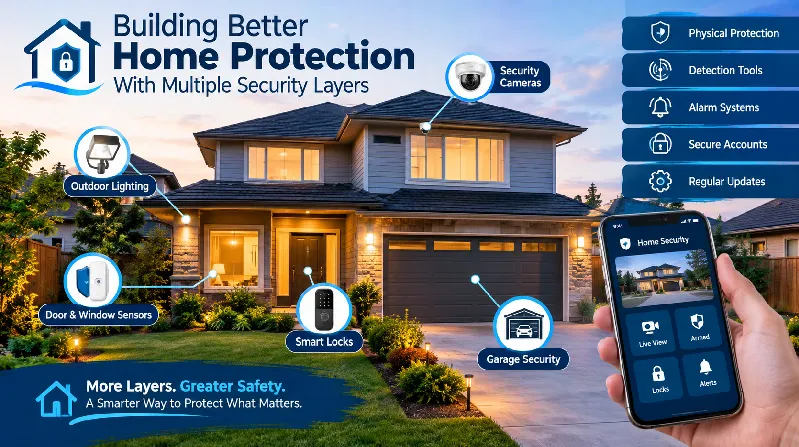
- A reliable home security plan uses multiple layers instead of relying on a single device.
- Start by reviewing doors, windows, garages, lighting, landscaping, and outdoor approaches.
- Physical protection, detection tools, and a clear response plan all work better together.
- Connected cameras, locks, and alarm systems need secure accounts and regular updates.
- Routine testing helps make sure your system still fits your home and household.
Home security is most effective when it does more than send an alert after something happens. The goal is to make entry more difficult, spot unusual activity early, and give household members a simple way to respond. A layered plan can begin with practical improvements, then grow over time as your needs and budget change.
For homeowners who want help combining alarms, cameras, monitoring, and access control, professional alarm installation from Zions Security Alarms can provide a useful starting point. Zions Security Alarms offers home and commercial security services, including alarm systems, security cameras, 24/7 monitoring, mobile surveillance, and access control, with installation and monitoring services in Utah, Arizona, California, Colorado, Texas, and Idaho.
Why a Layered Plan Works
No single product protects every part of a property. A camera can help you see and review activity, a sensor can detect an opening, and an alarm can notify you or a monitoring center. Physical barriers can also slow an attempted entry. Each layer addresses a different part of the problem.
- Deter: Use visible lighting, maintained landscaping, secure gates, locks, and cameras.
- Detect: Add door contacts, window sensors, motion detectors, glass-break sensors, and cameras.
- Delay: Reinforce doors, frames, locks, windows, and garage access.
- Respond: Set up alerts, monitoring, emergency contacts, and a household plan.
Start With a Home Security Assessment
Walk around your property in daylight and again after dark. Look for areas where someone could approach, wait, or reach an entry point without being easily noticed. Make a simple sketch of the home and mark exterior doors, accessible windows, gates, lights, cameras, and potential blind spots.
Questions to Ask During the Walkthrough
- Which doors or windows are hidden from the street or nearby homes?
- Can a fence, tree, ladder, or roofline provide easier access to an upper window?
- Are side yards, rear doors, and walkways adequately lit at night?
- Does the garage connect directly to the home?
- Can valuables be seen easily through ground-floor windows?
Build the Outer Layer
The outside of your home should be easy to observe and difficult to use as cover. Trim shrubs near windows and walkways, secure tools and ladders, and avoid leaving spare keys in predictable hiding places. Motion-activated lighting can be especially useful near driveways, side gates, porches, and rear entries. Place exterior cameras with a purpose. Prioritize approach paths and entry points, such as the front door, driveway, side yard, back gate, and garage. A camera aimed at an open yard may be less useful than one positioned to capture a person approaching a door.
Strengthen Doors, Windows, and the Garage
Smart devices add awareness, but sound physical security remains essential. Check that exterior doors close fully, deadbolts operate smoothly, and strike plates are firmly attached to solid framing. Repair loose hinges, damaged frames, or locks that require extra force to engage.
Review sliding glass doors, basement windows, pet doors, and the interior door between the garage and the home. Treat a garage door opener, remote, or exterior keypad as part of your home security plan, not a separate convenience feature. Make sure everyone in the household knows which doors and windows to lock before leaving or going to bed.
Choose the Right Security Technology
Choose devices based on the risks you identified during your walkthrough, rather than buying the largest possible package. Good placement usually matters more than the total number of devices.
- Door and window sensors: Best for exterior doors, accessible windows, and garage access points. They can report when a protected opening is opened.
- Motion sensors: Useful in hallways, stairways, and central rooms where movement is likely to pass through.
- Security cameras: Helpful for viewing activity around doors, driveways, porches, and side paths.
- Glass-break sensors: Worth considering in rooms with large windows or sliding glass doors.
- Environmental sensors: Smoke, carbon monoxide, water, heat, and freeze sensors can expand a plan beyond intrusion protection.
Protect Connected Security Devices
Security cameras, smart locks, alarm panels, and mobile apps are connected devices. Protect them by replacing default credentials, using unique passwords, enabling multi-factor authentication when it is available, and installing software updates. The Cybersecurity and Infrastructure Security Agency’s practical guidance for reducing internet exposure also emphasizes changing default passwords, updating supported systems, and using multi-factor authentication where possible.
Limit account access to the people who need it. Remove former residents, guests, or contractors from shared apps and change access codes when household circumstances change. If a device no longer receives security updates, consider replacing it.
Create a Household Response Plan
Technology is more useful when everyone knows what an alert means and what to do next. Keep the plan brief and age-appropriate. Identify which adults receive alerts, who calls emergency services when necessary, where children should go, and how pets will be handled.
Also, decide what to do if the power, internet connection, phone, or alarm panel is unavailable. Use national crime data as a broad context, not as a substitute for evaluating your own property. Let your routine, layout, neighborhood conditions, and entry points guide your priorities. Practice the household plan twice a year so the response feels familiar rather than frightening.
Test and Improve Your System
A security plan needs regular attention. Once a month, test alarm signals and mobile notifications, review camera views in daylight and darkness, check batteries, and confirm that doors and windows lock properly. Update emergency contacts and remove outdated user access.
2026 Home Security Checklist
- Exterior doors, frames, locks, and strike plates are in good condition.
- Ground-floor windows and garage access points are secured.
- Outdoor lighting covers dark approaches and entry paths.
- Cameras cover the most important approach routes and doors.
- Security accounts use unique passwords and multi-factor authentication where available.
- Devices, apps, and network equipment receive updates.
- Household members know how to respond to an alarm or emergency alert.
A strong home security plan is not about owning the most equipment. It is about using the right layers in the right places, maintaining them consistently, and making sure the people in your home are prepared to act.
Conclusion
A reliable home security plan starts with understanding the property and using several layers of protection rather than depending on a single device. Reviewing doors, windows, garages, lighting, landscaping, and outdoor approaches can help homeowners identify practical weaknesses before choosing security equipment. Physical improvements can make entry harder, while sensors, cameras, alarms, and environmental detectors can provide added awareness when properly placed and maintained. Protect connected devices with secure accounts, strong passwords, available multi-factor authentication, and regular software updates.
A household response plan is equally important because technology is most useful when everyone understands what an alert means and what steps to take. Regular testing can identify equipment, connectivity, access, or coverage problems before they become more difficult to address. Homeowners can also adjust their security measures as the property, household, technology, and daily routines change. By combining physical protection, detection, secure technology practices, and clear response procedures, homeowners can build a practical security plan that supports everyday safety without relying on unrealistic expectations.