
Introduction
Curly hair offers natural volume, movement, and personality, making it an excellent foundation for creative hairstyles. One haircut that combines texture with a distinctive silhouette is the modern mullet. By keeping the sides more controlled while leaving additional length at the back, this style creates a balanced look that can be subtle, relaxed, or bold.
Unlike traditional mullets, modern versions often use softer transitions, textured layers, and fades tailored to individual preferences. The result is a versatile haircut that can complement different curl patterns and personal styles.
Whether you prefer loose waves, defined ringlets, or tighter curls, understanding the available variations and learning how to maintain them can help you get the most out of this distinctive hairstyle.
What Is a Curly Modern Mullet?
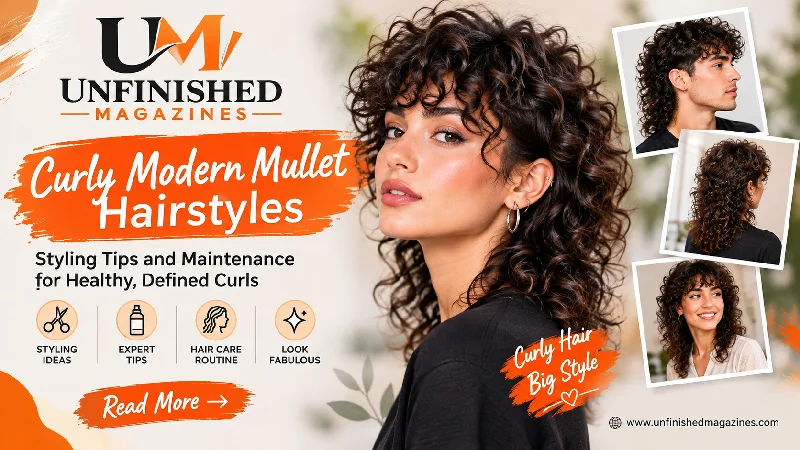
A curly modern mullet combines shorter or tapered sides with a fuller top and longer hair at the back. Its defining feature is the contrast between lengths, with natural curls adding volume and texture.
The modern interpretation is often more carefully shaped than the classic mullet. Instead of creating an abrupt division between short and long sections, a barber may use layering, tapering, or a fade to produce a more connected appearance.
Curly hair also behaves differently from straight hair. Curls can shrink as they dry, making the finished haircut appear shorter than it looked when wet. A stylist who understands curl patterns can account for this when deciding how much length to remove.
Popular Curly Modern Mullet Styles
1. Curly Mullet With a Low Taper
A low taper is a good choice for anyone who wants a modern appearance without an extremely dramatic contrast. The hair around the sideburns and neckline is gradually shortened, while the curls on top and at the back retain their natural volume.
This variation works well for casual settings and can be adapted to different curl lengths. It is also a practical starting point for someone trying a mullet for the first time.
2. Curly Mullet With a Burst Fade
A burst fade creates a curved fade around the ears while leaving more length toward the back. Paired with curls, it can emphasize the haircut’s shape and give the sides a clean finish.
This option generally creates more contrast than a low taper. Discuss the fade height with your barber so the final result complements your preferred silhouette.
3. Shaggy Curly Mullet
The shaggy version focuses on movement, layers, and a relaxed finish. Instead of making every section sharply defined, the stylist shapes the curls for a softer, slightly undone look.
This style suits people who enjoy natural texture and don’t want their hair to look overly structured. A lightweight styling cream can help individual curls hold their shape without stiffening the hair.
4. Short Curly Modern Mullet
A shorter mullet keeps the back relatively compact while retaining the haircut’s characteristic shape. It’s a good option for people who want to experiment with the trend without committing to a longer back section.
The key is to maintain enough contrast between the crown and back while avoiding excessive bulk around the sides.
5. Long Curly Mullet
For those who prefer a more noticeable style, a longer curly mullet lets the curls at the back become the central feature. Layers can distribute volume and keep the back from looking too heavy.
This variation requires patience as you grow your hair out and may benefit from occasional shaping appointments to maintain the overall outline.
How to Choose the Right Curly Mullet
Choosing a suitable haircut involves more than selecting a photograph from social media. Your curl pattern, hair density, current length, daily routine, and preferred level of contrast all influence the final result.
People with loose waves may prefer softer layers that preserve movement. Tighter curls can create a fuller silhouette, so careful shaping may help control unwanted bulk.
Face shape can also be a useful consideration, but it shouldn’t be treated as a strict rule. A skilled barber can adjust the fringe, crown height, side length, and back section to create a balanced, personal result.
Before your appointment, collect two or three reference photos showing the front, sides, and back. Explain how much length you want to retain and how much time you are willing to spend styling your hair.
Essential Styling Tips for Curly Modern Mullets
Start With Clean, Damp Hair
After washing, gently remove excess water with a soft microfiber towel or cotton T-shirt. Vigorously rubbing curls can encourage frizz and disrupt their natural pattern.
Styling products generally distribute more easily through damp hair than through completely dry curls.
Use Lightweight Curl Products
A curl cream, leave-in conditioner, or lightweight gel can help improve definition and manage frizz. The ideal product depends on your hair’s thickness and how much hold you prefer.
Start with a small amount, and add more only if needed. Too much product can weigh down finer curls or leave your hair feeling coated.
Scrunch Rather Than Brush
Apply your chosen styling product and gently scrunch the curls upward with your hands. This encourages their natural shape without unnecessary separation.
If you need to detangle, use your fingers or a wide-tooth comb while your hair is wet and conditioned. Brushing dry curls repeatedly can create unwanted volume and frizz.
Air-Dry or Use a Diffuser
Air-drying can help preserve natural texture when you have enough time. If you prefer faster drying, use a diffuser on a low or moderate heat setting.
Avoid touching the curls constantly while they dry. Once your hair is fully dry, gently separate a few sections for extra volume.
A Simple Curly Hair Maintenance Routine
A well-shaped haircut is easier to manage when your hair gets consistent care.
Daily care: Refresh flattened curls with a little water or a suitable lightweight styling product. Avoid adding unnecessary layers of product every morning.
Wash days: Choose a shampoo and conditioner suited to your scalp and hair needs. If your curls feel dry, a moisturizing conditioner may help improve softness and manageability.
Weekly care: Consider a conditioning treatment if your hair needs additional moisture. Adjust the frequency based on your hair’s condition rather than a rigid schedule.
Haircut maintenance: Schedule trims based on how quickly your hair grows and how precise you want the sides to stay. A pronounced fade may need more frequent attention than a softer, grown-out style.
Night-time protection: A satin or silk pillowcase may reduce friction for some hair types. Loosely protecting longer curls can also help preserve their shape overnight.
Common Curly Mullet Mistakes to Avoid
One common mistake is cutting too much length from the back before understanding how the curls will sit when dry. Because shrinkage varies, it is helpful to communicate your preferred finished length before the haircut begins.
Another mistake is removing too much weight from the crown or transition area. Excessive thinning can sometimes disrupt curl definition and make the overall shape difficult to manage.
Heavy products can also reduce volume, especially for fine curls. On the other hand, skipping conditioner entirely may leave some hair types dry and hard to detangle.
Finally, choosing a style solely because it looks good on someone else can lead to disappointment. A better approach is to adapt the haircut to your own curl pattern, lifestyle, and styling preferences.
How to Explain Your Desired Haircut to a Barber
Clear communication can make a major difference in the finished result. Tell your barber you want a modern mullet tailored to your natural curl pattern.
Explain whether you prefer a low taper, a burst fade, or a softer transition. Point out how much length you want to keep at the back and whether you prefer a defined or shaggy finish.
If possible, show reference images from several angles. Ask the barber how the proposed cut will look when your curls dry, and discuss any concerns about shrinkage or excessive volume before they start cutting.
A consultation is particularly useful if you are moving from a conventional short haircut to a more pronounced mullet.
Conclusion
The curly modern mullet combines natural texture with a distinctive shape, offering plenty of room for individual expression. From subtle low-taper versions to layered, shaggy styles and more dramatic fades, you can adapt the haircut to different preferences.
The best results come from choosing a cut that works with your curl pattern, communicating clearly with your barber, and following a manageable hair-care routine. With thoughtful shaping and the right styling techniques, a curly modern mullet can stay expressive, versatile, and easy to personalize.
If you are considering a change, explore different curly modern mullet styles, styling tips, and maintenance ideas to help you prepare for your next haircut and find an approach that suits your hair.