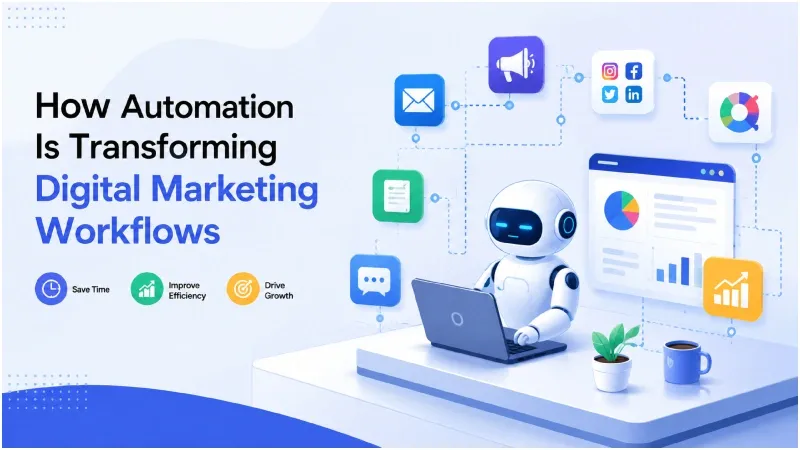
The landscape of digital marketing is ever-changing. As each day passes, more and more tools and automations gain traction with marketers. These changes are embraced because, at their heart, they’re designed to expedite many long-winded processes or even to provide customers with a better service than ever before.
Whether your business wants to adopt hyper-personalization, trigger-based campaigns, or simply AI-powered efficiency, the benefits are numerous. In this article, we’ll give you an overview of each of these transformations so that you can make the right decisions for your business and your digital marketing team.
Make your personalized marketing work harder
As a customer or as a business leader, you will be very familiar with the idea of personalized marketing. Customers sign up for an email mailing list or opt in to marketing communications, which means your team can reach out to them with targeted emails for their demographic. Perhaps that means mothers on Mother’s Day, or young men on the eve of a major sporting tournament start date.
However, what you may not have realized is that, thanks to automation, many brands can now deliver highly personalized messages based on individual user behavior or previously determined preferences. This means your marketing is no longer a one-size-fits-all approach; you can rely on data-driven systems to send personalized messages via email or SMS to customers who meet certain criteria.
As an example of this, perhaps a theme park or visitor attraction sets up hyper-personalization automation that learns that female users aged between 30 and 45 prefer to book a specific arrival time at the venue on the evening before their visit. The system can then trigger a specific text message or email along the lines of “Would you like to guarantee your arrival time for tomorrow? Click here to book your time slot,” directly engaging customers and preparing them for a stress-free visit.
Build trigger-based campaigns for better conversion
Another way that automation is helping digital marketing workflows work smarter and harder for their customers is with trigger-based campaigns. In essence, this means that your marketing team can now build a series of events that produce an “if this then that” scenario.
Instead of your digital marketing campaigns being built on a system of cold leads, warm leads, and conversion, your team can now design specific events to occur based on the exact actions customers take throughout the journey.
One clear example of the benefits of this is when a B2B company provides a report to an audience of users it believes would be interested in its business, service, or research. Once a customer downloads a report and becomes a lead, instead of being served generic adverts for lead conversion, they can now be sent adverts specific to the report they accessed and a different lead-conversion campaign.
Another way to understand this is that your marketing team can serve two different lead-conversion adverts: one to warm leads your sales team has in their system, and one to interested leads who signed up to download your PDF report. This type of trigger-based campaign allows you much more flexibility to meet your potential customers where they are, rather than throwing everyone into the same conversion advert campaign.
AI-powered efficiency increases workflow without enlarging headcount
One final way to embrace automation’s impact on the transformation of digital marketing is to harness AI-powered efficiencies. Whether this is by providing background research on your competitors or generating starting points for content topics to fill gaps in your SEO keyword coverage, there are plenty of documented ways AI tools can improve the workflows of marketing teams.
A major benefit of AI in this sense is reducing the impact of human error and the overall time required to complete typical marketing tasks. One widely used benefit of AI-powered efficiency is in social media scheduling. Most major tools and platforms now use AI to optimize the publication time of a company’s social media posts, so they appear when most of their audience is usually active on their chosen platforms.
Whilst AI is not a reliable form of creating publishable content, many digital marketers do use it to create a list of potential topics for future blog posts based on your SEO keywords, or even to map out a social media posting strategy to ensure that all your important topics are covered in the month, with your marketing team then writing the content themselves based on the strategy outlined by AI tools.
A major use of automation is also in data gathering, where digital marketing teams identify the best proxy server for their required locations and set up automations to track pricing and product changes with your main competitors, which gives you access to up-to-the-hour reporting on anything and everything that your business views as important to get ahead of your rivals.
Numerous benefits are available for your digital marketers
As we said at the start, the benefits of using these automations are numerous for digital marketing teams. There is evidence that using these transformations can increase productivity within a marketing team by 0.5-3.4% annually, as your team will be able to take on more of the essential jobs that keep your business moving forward. Ultimately, this provides cost savings for your business, as more work can be done without increasing administrative headcount in your digital marketing department.
Data-backed decision-making also gives your business an added advantage within the competitor landscape. Having automated reporting and real-time insights available to business leaders at any time means your team can pivot and make quick strategic adjustments based on actual performance against your KPIs (key performance indicators).
Now that you have a better understanding of how automation is developing within digital marketing workflows, you can help your team make improvements by embracing as many of these transformations as you think apply to your business or products and services.
One thing is for sure: embracing elements such as deploying the best proxy server you can find for your team and allowing them to implement hyper-personalization or trigger-based ad campaigns will enable them to take on more jobs while AI works hard for them in the background.