Key Takeaways
- Emphasize quality over quantity by securing high-authority, relevant backlinks.
- Utilize digital PR to obtain media coverage and authoritative links.
- Incorporate AI tools for efficient prospecting and content creation.
- Adhere to Google’s E-E-A-T guidelines to establish trust and authority.
- Forge strategic local partnerships to enhance geographic relevance.
Table of Contents
- Understanding White Label Link Building
- Prioritizing Quality Over Quantity
- Leveraging Digital PR for Authoritative Links
- Integrating AI in Link Building Processes
- Adhering to E-E-A-T Guidelines
- Building Strategic Local Partnerships
- Monitoring and Adapting to Algorithm Updates
- Conclusion
In the dynamic world of SEO, white-label link building has become a pivotal strategy for agencies aiming to bolster their clients’ online visibility. As we progress through 2026, implementing effective and ethical link-building practices is essential for sustained success.
Partnering with established providers like Vazoola reseller backlink services can significantly enhance an agency’s link-building efforts. Vazoola offers comprehensive white-label link-building solutions that enable agencies to deliver high-quality backlinks under their own brand. With a focus on quality, scalability, and adherence to best practices, Vazoola empowers agencies to meet client demands efficiently.
Understanding White Label Link Building
White-label link building involves outsourcing the acquisition of backlinks to specialized providers while maintaining your agency’s branding. This approach allows agencies to offer comprehensive SEO services without requiring in-house link-building expertise. By partnering with experienced providers, agencies can scale their operations efficiently and deliver consistent results to clients.
It also allows agencies to tap into diverse backlink strategies that they may not be able to execute internally due to limited resources or connections. Providers often have robust networks and dedicated outreach teams, making it easier to attain placements on reputable websites across various industries. Through collaborative communication, agencies can ensure the outreach and content style align with their preferred messaging, keeping the tone and branding intact while achieving excellent SEO outcomes for clients.
Prioritizing Quality Over Quantity
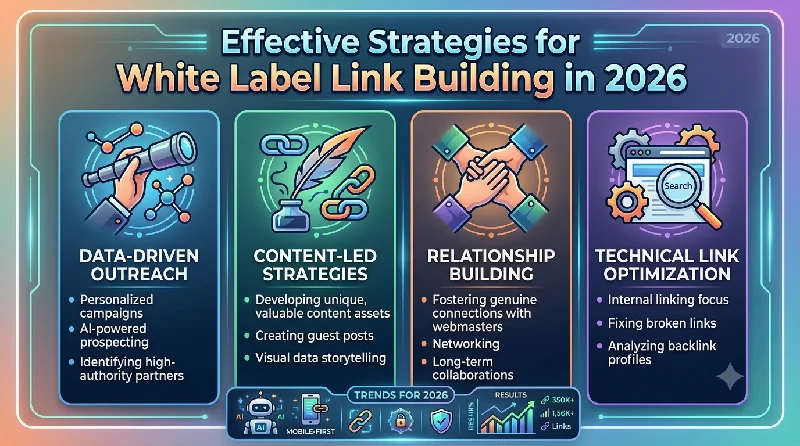
The focus of link building has shifted from quantity to quality. In the past, SEO strategies often prioritized acquiring as many backlinks as possible, but now, search engines reward quality over sheer volume. The shift is clear: a few high-quality, relevant backlinks will outperform hundreds of low-quality ones. In 2026, this trend is more important than ever. Google and other search engines are focusing on rewarding sites that offer valuable, relevant content with backlinks from authoritative sources.
For agencies, this means assessing backlink prospects based on their editorial standards, relevance to client industries, organic search traffic, and trust signals. Manual vetting, combined with AI-driven analysis, ensures that every acquired link adds tangible value. Not only do high-quality links boost rankings, but they also drive qualified referral traffic, an increasingly important metric as SEO matures beyond basic keyword targeting.
Leveraging Digital PR for Authoritative Links
Digital PR has emerged as a powerful tool for link-building. By creating newsworthy content and engaging with media outlets, agencies can secure high-authority backlinks from reputable sources. This approach not only enhances SEO performance but also builds brand credibility and awareness. Effective digital PR involves crafting compelling stories, conducting original research, and establishing relationships with journalists and influencers.
One of the most impactful tactics in 2026 is the integration of data-driven campaigns, surveys, expert roundups, and proprietary research, presented to journalists as exclusive content. Such campaigns often gain organic traction and are amplified through syndication, social media, and citation in further articles. The ripple effect of a single strong campaign can lead to sustained link acquisition and persistent online visibility.
Integrating AI in Link Building Processes
Artificial intelligence has entered link-building workflows at multiple points, and agencies need a clear-eyed view of where it helps and where it introduces risk. AI tools can process large publisher databases, score topical relevance against target content, and flag potential placements with unusual backlink profiles far faster than manual analysis. This reduces the time between intake and the start of outreach.
Moreover, AI-powered tools now support personalized outreach campaigns by generating email subject lines and body text tailored to the prospect’s interests. Predictive analytics, fueled by machine learning, helps agencies forecast which outreach strategies and target sites are most likely to yield strong links. While AI is powerful, it’s crucial to regularly review AI-generated recommendations to avoid patterns that may appear spammy or inauthentic to web admins. The human touch remains vital, especially in negotiations and relationship building.
Adhering to E-E-A-T Guidelines
Google’s emphasis on Experience, Expertise, Authoritativeness, and Trustworthiness (E-E-A-T) has made it imperative for agencies to align their link-building strategies accordingly. This involves securing links from reputable sources, ensuring content is authored by qualified individuals, and providing transparent, accurate information. Adhering to E-E-A-T guidelines not only improves search rankings but also fosters user trust.
Attention to E-E-A-T should influence every stage of the link acquisition process, from selecting editorial partners to documenting sources within linked articles. Agencies that can demonstrate genuine expertise, offer insightful commentary, and maintain clear author attributions are better positioned to earn valuable placements on authority sites. E-E-A-T is not just a compliance checkbox, but a guiding philosophy for sustainable SEO.
Building Strategic Local Partnerships
Forming partnerships with local businesses and organizations can yield valuable backlinks that enhance geographic relevance. These collaborations can include co-hosting events, sponsoring local initiatives, or contributing content to local publications. Such partnerships not only provide quality backlinks but also strengthen community ties and brand visibility.
To maximize value, agencies might create joint content pieces, participate in local interviews or podcasts, or lead nonprofit projects that get covered in local digital news outlets. As voice search and personalized results become more prevalent, these hyper-relevant connections are likely to further boost rankings for “near me” and city-specific keyword searches, setting clients apart from national competitors.
Monitoring and Adapting to Algorithm Updates
Search engine algorithms are continually evolving, making it essential for agencies to stay informed about the latest changes. Regularly monitoring algorithm updates and adapting strategies accordingly ensures sustained SEO performance. This proactive approach involves analyzing performance metrics, staying up to date on industry news, and being prepared to pivot strategies as needed.
Successful agencies develop flexible link-building frameworks that can respond to sudden changes in how links are valued or penalized. Having a process in place to audit backlink profiles and rapidly disavow harmful links helps mitigate risk. Additionally, constant education through reputable SEO resources and ongoing experimentation can help agencies maintain an edge as the digital landscape shifts.
Conclusion
In 2026, effective white-label link building requires a strategic focus on quality, the integration of advanced tools like AI, adherence to E-E-A-T guidelines, and the cultivation of meaningful partnerships. By implementing these strategies, agencies can enhance their clients’ online presence and navigate the complexities of modern SEO with confidence.
Ultimately, the success of a white-label link-building campaign hinges on continuous learning, ethical outreach, and building long-term relationships with publishers and clients. While tools and tactics will evolve, the core principles of relevance, authority, and trust will remain at the heart of tactics that drive lasting SEO results. Agencies that prioritize adaptability and transparent communication will dominate the white-label landscape for years to come.