
Key Takeaways
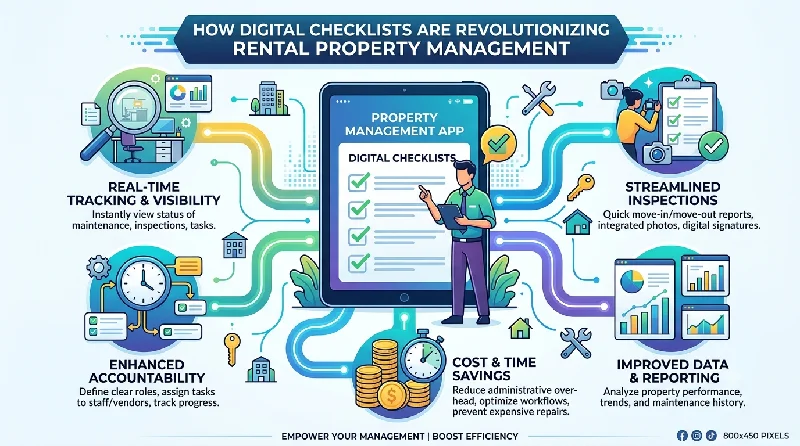
- Digital checklists enhance efficiency and accuracy in property management tasks.
- They improve communication between property managers, tenants, and maintenance staff.
- Integration with other digital tools offers a comprehensive management solution.
- Adopting digital checklists can lead to significant cost savings and increased tenant satisfaction.
Table of Contents
- Enhancing Efficiency and Accuracy
- Improving Communication
- Integration with Other Digital Tools
- Cost Savings and ROI
- Increased Tenant Satisfaction
- Overcoming Challenges in Adoption
- Future Trends in Digital Property Management
- Conclusion
In the fast-paced world of rental property management, efficiency and accuracy are crucial for success. The traditional paper-based approach often results in avoidable errors, miscommunication, and unnecessary delays for property managers and tenants alike. Digital checklists have emerged as an innovative solution by streamlining operations and raising the standard for tenant experience. Property managers who implement cleaning checklists and other digital tools find themselves staying ahead in a highly competitive market.
More than just a convenience, digital checklists transform how tasks are scheduled, tracked, and completed. By digitizing routine activities, property managers can achieve higher levels of accuracy while improving communication between themselves, their teams, and tenants. The ability to centralize information and assign responsibilities on the fly means that everyone stays up-to-date and nothing slips through the cracks.
For example, maintenance teams benefit from immediate notifications, ensuring repairs and inspections are scheduled and completed without unnecessary delays. Tenants appreciate the transparency and responsiveness made possible by these tools, which can dramatically improve their overall satisfaction. As property management evolves, digital checklists play a crucial role in supporting proactive management and long-term tenant retention strategies.
These tools also offer a seamless way to ensure compliance with industry regulations while keeping costs down. As more property managers adapt these processes, the entire industry is witnessing a notable shift toward more efficient and tenant-centered operations.
Enhancing Efficiency and Accuracy
Digital checklists greatly reduce the dependence on manual, paper-based processes, which are prone to errors and inconsistencies. Automated scheduling and task tracking ensure property managers never miss an important inspection or maintenance request. These checklists make it easier to log, update, and retrieve records, resulting in increased operational reliability.
For compliance-driven segments of property management, such as safety inspections and turnover operations, digital checklists offer systematic approaches to completing each step. Because these records are instantly updated and stored in the cloud, the risk of lost paperwork is eliminated. Consistent, accurate records can also help managers avoid fines and maintain a high standard of accountability throughout their portfolio.
Improving Communication
One of the most valuable aspects of digital checklists is their ability to improve communication between all parties involved in property management. Tenants can submit maintenance requests and receive instant confirmation, while property managers can quickly assign and prioritize tasks based on urgency. Maintenance staff benefits from clear, real-time updates, reducing confusion and repeat visits.
This level of transparency ensures tenants feel heard and their concerns are addressed in a timely manner. Property managers are also empowered to provide higher-quality service while reducing misunderstandings and delays that may otherwise damage their professional reputation. The resulting streamlined workflow brings measurable improvements to day-to-day operations.
Integration with Other Digital Tools
Digital checklists are even more powerful when combined with other technology platforms. By integrating with property management software and mobile applications, these checklists provide a centralized hub for real-time information. Managers can oversee operations remotely, access property history on the go, and easily communicate with tenants and on-site teams. This integration is central to building a flexible and responsive property management process.
Cost Savings and ROI
Switching to digital checklists can yield significant cost savings through increased efficiency and resource optimization. Property managers save both time and money by cutting back on manual data entry, reducing human error, and automating repetitive tasks. With fewer mistakes and streamlined operations, organizations often see a strong return on investment as operational costs decline and profits rise.
Additionally, digital checklists help extend the lifecycle of property assets through timely maintenance and repair, reducing both emergency costs and tenant turnover. These cumulative benefits contribute directly to improved financial outcomes across the board.
Increased Tenant Satisfaction
Tenants expect responsive, professional service from their property managers. By using digital checklists, property teams can ensure that maintenance requests are swiftly acknowledged and addressed. Inspections are conducted on schedule, and communication becomes more transparent, contributing to an overall better living experience.
Proactive management, made possible by digital processes, plays a central role in retaining tenants and minimizing vacancies. Satisfied tenants are more likely to renew leases and recommend properties to others, further driving the success of the property management business.
Overcoming Challenges in Adoption
Transitioning from traditional paper-based methods to digital checklists is not without its challenges, especially for those less familiar with technology. Resistance to change, concerns about cost, and lack of technical expertise can all slow adoption. The key to overcoming these obstacles is clear communication about the benefits, providing thorough training, and demonstrating real-world improvements in efficiency and tenant satisfaction.
Support from software providers and industry groups can also make this transition smoother. Many vendors offer onboarding, technical support, and online resources to help property teams successfully implement new digital tools.
Future Trends in Digital Property Management
The landscape of property management continues to evolve, with digitalization at the forefront. Artificial intelligence, smart home technology, and predictive analytics are shaping the next wave of change. Soon, digital checklists will feature proactive notifications for maintenance, real-time monitoring of safety equipment, and integration with broader data sources to allow for better long-term planning.
As these technologies mature, property managers will gain even more powerful tools to ensure compliance, protect assets, and maximize tenant satisfaction.
Conclusion
Digital checklists are transforming the rental property management industry. They unlock greater efficiency, facilitate communication, and deliver a superior experience for both tenants and managers. For those ready to embrace this shift, the benefits are clear: more reliable operations, happier tenants, and a more profitable business overall.