
Key Takeaways
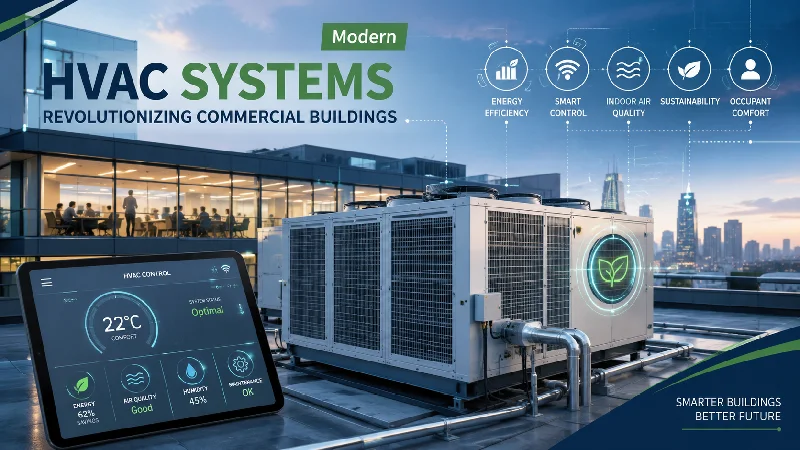
- Modern HVAC systems significantly improve energy efficiency in commercial buildings.
- The integration of smart technologies enables better control and monitoring of HVAC performance.
- Advancements in HVAC systems enhance indoor air quality and occupant comfort.
- Transition to low-GWP refrigerants aligns with environmental sustainability goals.
Table of Contents
- Introduction
- Enhancing Energy Efficiency
- Integration of Smart Technologies
- Improving Indoor Air Quality
- Advancing Environmental Sustainability
- Enhancing Occupant Comfort
- Future Trends in HVAC Systems
Modern HVAC systems are at the forefront of transforming commercial buildings. By maximizing energy efficiency, elevating indoor air quality, and integrating smart technologies, these systems have ushered in a new era of productivity and sustainability in workplaces. As businesses seek to optimize operations, demand for advanced commercial HVAC solutions continues to rise. To discover more about tailored commercial HVAC services, visit https://www.tsshvac.com/commercial-services/. These advancements are not just about managing temperature; they are redefining how commercial spaces operate, making them more cost-effective and environmentally responsible.
Beyond energy savings, today’s HVAC systems support real-time data integration and advanced environmental controls. Building owners can now monitor and adjust HVAC performance from anywhere, ensuring consistent comfort and efficiency. Modern units, which often feature automated sensors and eco-friendly refrigerants, play a key role in meeting modern sustainability standards. This shift benefits both occupants and organizations by reducing operational costs, enhancing comfort, and aligning with green building standards.
Large corporations and small businesses alike are embracing these innovations not only to satisfy regulatory requirements but also to enhance their reputation for environmental stewardship. Enhanced air filtration and precise control strategies contribute to the health and well-being of building occupants. The result is a win-win: happier, healthier employees and a noticeable reduction in energy costs.
Industry experts highlight how these systems can operate efficiently even at partial load, maximizing their potential to reduce both environmental impact and operational costs.
Proper sizing and initial setup remain vital to achieving these long-term performance gains. When planning upgrades for commercial facilities, scheduling a precise ac installation ensures that equipment capacity aligns with space demands. Correct sizing prevents short-cycling, helps maintain steady temperature levels, and supports overall system durability over years of continuous operation.
Enhancing Energy Efficiency
Energy efficiency remains one of the principal drivers behind modern HVAC upgrades in commercial buildings. Advanced systems leverage innovations such as variable refrigerant flow (VRF), which enables precise temperature control across different areas. These systems automatically adjust their output based on occupancy and demand, thereby vastly reducing energy waste. The U.S. Department of Energy recognizes these advancements as essential to reducing energy consumption in commercial buildings, thereby lowering utility costs and a building’s carbon footprint. For more information, visit the Department of Energy’s article on advancing energy efficiency in commercial buildings.
Integration of Smart Technologies
Smart HVAC integration is rapidly becoming standard within the commercial sector. Systems now utilize the Internet of Things (IoT), cloud-based analytics, and real-time monitoring to proactively address maintenance issues and optimize performance. For example, sensors can monitor everything from air quality to equipment wear, helping facility managers forecast issues before they become costly repairs. Smart controls also enable facilities to automate heating and cooling schedules, further conserving energy during unoccupied periods. These innovations lead to notable reductions in unnecessary usage and extend the lifespan of expensive HVAC equipment.
Improving Indoor Air Quality
Enhanced indoor air quality (IAQ) is a top priority, especially after widespread concerns about airborne contaminants. Modern HVAC systems employ high-efficiency particulate air (HEPA) filters and ultraviolet (UV) light purification to remove dust, allergens, bacteria, and viruses from the air circulated throughout the system. Proper ventilation strategies, including demand-controlled ventilation, maintain appropriate humidity levels and fresh air exchange, both critical for occupant health. Studies by the Environmental Protection Agency show that improved IAQ can also lead to higher workplace satisfaction and productivity. For more details, refer to the EPA’s resources on indoor air quality for building owners and managers.
Advancing Environmental Sustainability
A significant aspect of the evolution of modern HVAC is the use of refrigerants with low global warming potential (GWP). Traditional refrigerants have been found to contribute to greenhouse gas emissions, prompting global regulations and industry-wide adoption of alternatives such as R-32. These refrigerants require specialized system design and maintenance protocols but offer a clear path to sustainability by minimizing environmental impact. As noted by industry publications, the commercial HVAC landscape is rapidly shifting to meet international sustainability commitments and prepare for future regulatory changes. For more insights, see the article on the commercial HVAC forecast, which highlights the shift to low-GWP refrigerants in 2026.
Enhancing Occupant Comfort
Occupant comfort is a defining success metric for HVAC performance in modern commercial spaces. Zoning systems are increasingly popular, allowing individual tenants or departments to control their air quality and temperature settings. This level of personalization boosts productivity, reduces complaints, and caters to the specific needs of a diverse workforce. Advanced controls and user-friendly interfaces make it easier than ever for building occupants to set preferences that match their comfort requirements while the system optimizes the background operations for maximum efficiency.
Future Trends in HVAC Systems
Looking forward, the commercial HVAC industry is moving towards AI-driven predictive maintenance, integration with renewable energy sources such as solar panels, and the miniaturization of system components. Artificial intelligence can analyze data patterns to predict maintenance needs or performance adjustments, improving reliability and reducing downtime. Renewable energy integration is another transformative step, allowing buildings to offset HVAC energy consumption with on-site generation. As these cutting-edge trends evolve, they promise further gains in sustainability, cost savings, and occupant well-being, ensuring commercial buildings meet the demands of the future.
Modern HVAC systems are critical tools for shaping the built environment to improve energy savings, environmental stewardship, and occupant health. Facility managers and owners who embrace these advancements will position their buildings as leaders in innovation and sustainability, fostering both immediate and long-term benefits for all stakeholders.