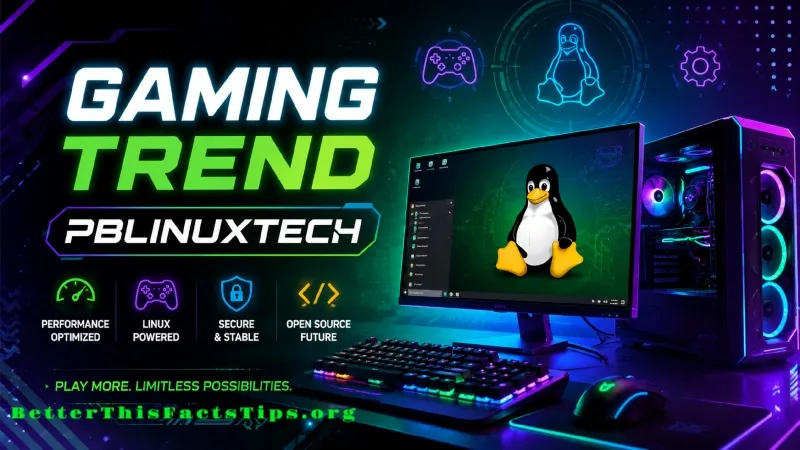
Gaming has evolved far beyond simple entertainment. Today, it is a global industry powered by advanced technologies like cloud computing, artificial intelligence, virtual reality, and high-performance hardware. Among the emerging names gaining attention in tech discussions is PBLinuxTech, often associated with Linux-based gaming innovation, performance optimization, and open-source gaming environments.
The phrase “Gaming Trend PBLinuxTech” reflects a growing movement where gaming is becoming more flexible, efficient, and accessible through Linux-based systems and modern software development approaches. This article explores the latest features, innovations, and future direction of gaming under this trend, highlighting how it is reshaping the gaming ecosystem for developers and players alike.
Understanding PBLinuxTech in Gaming
PBLinuxTech can be understood as a concept or platform focused on Linux-based technology solutions for gaming environments. Linux has traditionally been known for its stability, security, and flexibility, but it was once considered less suitable for gaming due to limited game support.
However, with improvements such as Proton (developed by Valve), Steam Play, and the Vulkan API, Linux gaming has experienced massive growth. PBLinuxTech represents this shift toward optimized gaming experiences on Linux systems.
Key Idea Behind Gaming Trend PBLinuxTech
- Enhancing gaming performance on Linux systems
- Increasing compatibility with modern AAA games
- Supporting open-source gaming development
- Reducing dependency on traditional operating systems like Windows
This trend is not just technical—it is also philosophical, focusing on freedom, customization, and performance.
Rise of Linux in the Gaming Industry
Linux was once ignored by game developers due to its small user base. However, the situation has changed significantly in recent years.
Reasons Behind Linux Gaming Growth
- Introduction of Steam Deck, a Linux-based gaming device
- Proton compatibility layer allowing Windows games to run on Linux
- Growth of Vulkan API for better graphics rendering
- Increasing interest in open-source ecosystems
Impact on Gaming Trend
The gaming trend associated with PBLinuxTech is strongly influenced by these developments. Gamers now have access to thousands of games on Linux without needing Windows at all.
New Features in Gaming Trend PBLinuxTech
The modern gaming ecosystem under PBLinuxTech introduces several new features that enhance performance, compatibility, and user experience.
Proton Compatibility Layer
Proton is one of the biggest breakthroughs for Linux gaming.
- Allows Windows games to run smoothly on Linux
- Built into Steam
- Reduces need for dual-boot systems
Vulkan Graphics API
Vulkan is a next-generation graphics API that, in many cases, replaces older systems like DirectX.
- Better GPU utilization
- Lower CPU overhead
- Improved frame rates
Open-Source Game Engines
Linux supports powerful open-source engines like:
- Godot Engine
- Panda3D
- Ogre3D
These engines allow developers to create games without licensing restrictions.
Lightweight System Performance
Linux-based gaming environments often consume fewer system resources than Windows-based ones.
- Faster boot times
- Less background processing
- Better hardware efficiency
Custom Gaming Distributions
Special Linux distributions such as:
- SteamOS
- Pop!_OS
- Ubuntu GamePack
are optimized specifically for gaming performance.
Advantages of Gaming Trend PBLinuxTech
The growing adoption of PBLinuxTech gaming solutions offers significant advantages for both gamers and developers. By leveraging Linux-based environments and open-source technologies, this trend enhances performance, reduces costs, and increases flexibility in modern gaming systems.
Cost Efficiency
One of the most important advantages of Linux-based gaming under the PBLinuxTech trend is cost efficiency. Linux is completely free and open-source, meaning users do not need to pay licensing fees as they do for many proprietary operating systems.
For gamers, this reduces overall setup costs, while developers benefit from free access to development tools, libraries, and frameworks. This makes gaming more accessible, especially for users with limited budgets or entry-level systems.
Better Performance
PBLinuxTech gaming environments are often optimized for performance, resulting in smoother gameplay and improved frame rates (FPS). Linux systems generally consume fewer background resources than other operating systems, allowing more system resources to be dedicated to gaming.
Additionally, technologies like the Vulkan API and Proton compatibility layers help games run more efficiently, sometimes even outperforming traditional Windows setups in certain titles.
High Security
Security is another major strength of Linux-based gaming systems. Linux has a strong reputation for being resistant to viruses, malware, and unauthorized access due to its permission-based architecture.
For gamers, this means a safer online gaming experience with reduced risk of system corruption or data theft. Developers also benefit from a more stable and secure environment for building and testing games.
Customization
One of the standout features of PBLinuxTech gaming systems is the level of customization they offer. Users can modify nearly every aspect of the operating system, including the desktop environment, system performance settings, and visual appearance.
Gamers can optimize their systems according to their hardware needs, whether focusing on maximum performance, battery efficiency, or visual quality. This level of control is rarely available in traditional gaming platforms.
Developer Freedom
PBLinuxTech strongly supports open-source development, giving developers greater freedom to create and innovate without restrictive licensing or closed ecosystems.
Game developers can access powerful open-source engines, tools, and libraries, allowing them to experiment and build games more flexibly. This encourages creativity, collaboration, and faster innovation in the gaming industry.
Challenges in Linux Gaming Ecosystem
Despite the rapid growth of the Linux gaming trend, Linux-based gaming still faces several challenges that limit its full adoption. While improvements in compatibility layers and open-source tools have made significant progress, certain technical and industry-related barriers still exist.
Game Compatibility Issues
One of the biggest challenges in Linux gaming is game compatibility. Although tools like Proton and Steam Play have significantly improved the situation, not all Windows-based games run smoothly on Linux.
Some games may experience:
- Performance drops
- Missing features
- Graphics glitches
- Incomplete controller support
This happens because many modern games are still primarily developed and optimized for Windows systems. As a result, Linux users may encounter limitations when accessing certain AAA titles.
Driver Support
Another key issue is GPU driver optimization. While Linux supports major graphics cards such as NVIDIA and AMD, driver performance is not always consistent.
In some cases:
- Windows drivers are more optimized for gaming
- Linux drivers may require manual installation or configuration
- Updates may not always be as frequent or stable
This can lead to differences in frame rates, stability, and overall gaming performance compared to Windows systems.
Learning Curve
Linux-based gaming systems often require a higher level of technical knowledge compared to traditional operating systems.
Users may need to:
- Use terminal commands
- Configure system settings manually
- Troubleshoot compatibility issues
- Install drivers or software packages independently
For beginner gamers, this learning curve can be a barrier, especially for those used to plug-and-play gaming on Windows consoles or PCs.
Limited Official Support
Many game developers still prioritize Windows as their primary platform for development and release. As a result, Linux versions of games are either delayed or not officially supported at all.
This leads to:
- Fewer native Linux game releases
- Dependence on compatibility layers like Proton
- Limited customer support for Linux-related issues
Although the situation is gradually improving due to industry demand and platforms like Steam Deck, Linux is still not the first choice for many major developers.
Future Insights of Gaming Trend PBLinuxTech
The future of gaming within the PBLinuxTech ecosystem appears highly promising as technology continues to evolve rapidly. With advancements in cloud computing, artificial intelligence, and open-source development, Linux-based gaming is expected to become more powerful, accessible, and mainstream in the coming years.
Growth of Cloud Gaming
Cloud gaming is expected to play a major role in shaping the future of the Gaming Trend PBLinuxTech. Instead of relying heavily on local hardware such as high-end GPUs or processors, games will be streamed directly from powerful remote servers.
This development will:
- Reduce the need for expensive gaming PCs
- Allow users to play high-end games on low-spec devices
- Improve accessibility for global gamers
- Enable instant game access without long downloads or installations
As cloud platforms continue to grow, Linux-based systems will benefit from improved compatibility and performance in cloud environments.
Expansion of SteamOS
SteamOS, developed by Valve, is expected to become a key driver of Linux gaming adoption. Built on a Linux foundation, it is designed specifically for gaming performance and ease of use.
In the future, SteamOS may:
- Become a mainstream gaming operating system
- Replace traditional Windows-based gaming setups for many users
- Offer a more stable and optimized gaming environment
- Expand beyond handheld devices like the Steam Deck to desktops and laptops
This expansion will significantly strengthen the PBLinuxTech gaming ecosystem.
AI Integration in Gaming
Artificial intelligence is poised to revolutionize gaming experiences as part of the PBLinuxTech trend. AI will not only improve game design but also enhance player interaction with games.
Key improvements include:
- Smarter NPC behavior: Non-player characters will respond more realistically to player actions
- Dynamic difficulty balancing: Games will automatically adjust difficulty based on player skill
- Personalized experiences: Gameplay, missions, and environments may adapt to individual player preferences
This will create more immersive, engaging, and realistic gaming environments.
Full Windows–Linux Compatibility
One of the most important future developments is the continued improvement of compatibility layers such as Proton. These technologies aim to bridge the gap between Windows and Linux gaming.
In the future, this may lead to:
- Near 100% compatibility with Windows-based games
- Seamless gameplay without performance loss
- Elimination of the need for dual-boot systems
- Wider adoption of Linux as a primary gaming platform
This advancement could be a major turning point for the worldwide adoption of Linux gaming.
Rise of Open-Source Gaming Communities
The growth of open-source gaming communities is another key trend shaping the future of PBLinuxTech. More developers and enthusiasts are contributing to Linux-based gaming projects, engines, and tools.
This trend will:
- Encourage innovation and collaboration
- Increase the number of Linux-native games
- Strengthen community-driven development models
- Reduce dependency on large commercial publishers
As a result, gaming will become more democratic, creative, and community-focused.
Role of PBLinuxTech in Modern Gaming Culture
PBLinuxTech is not just about technology—it also represents a cultural shift in gaming.
- Encourages open-source collaboration
- Supports independent game developers
- Promotes system freedom and control
- Redefines how gamers interact with operating systems
This makes it part of a broader movement toward decentralized and user-controlled gaming environments.
Gaming Performance Optimization in Linux
Performance optimization plays a crucial role in the Gaming Trend PBLinuxTech, as it directly affects gameplay smoothness, system responsiveness, and overall user experience. Linux-based gaming systems are highly flexible, allowing users to fine-tune their environments for maximum efficiency. By applying the right optimization techniques, gamers can significantly improve performance even on mid-range hardware.
Key Optimization Techniques
- Using lightweight desktop environments (like XFCE or KDE Plasma)
- Enabling GameMode for CPU prioritization
- Installing proprietary GPU drivers
- Using SSD storage for faster loading
These techniques significantly improve gaming experience on Linux systems.
Comparison with Windows Gaming
| Feature | Linux (PBLinuxTech) | Windows |
|---|---|---|
| Cost | Free | Paid OS |
| Security | High | Moderate |
| Game Compatibility | Improving | Very High |
| Performance | Optimized | Stable |
| Customization | Very High | Limited |
While Windows still dominates gaming, Linux is rapidly closing the gap.
Conclusion
The Gaming Trend PBLinuxTech represents a powerful shift in the gaming world. With advancements in Proton, Vulkan, open-source engines, and gaming-focused Linux distributions, the gap between Linux and traditional gaming platforms is shrinking rapidly.
Although challenges like compatibility and driver support still exist, the future clearly points toward greater adoption of Linux-based gaming ecosystems.
In the coming years, PBLinuxTech could play a major role in shaping a more open, flexible, and high-performance gaming world where users have full control over their systems and experiences.